


A Leadership Pathway for Education, Gender & Community Transformation
What is the SEP Fellowship?
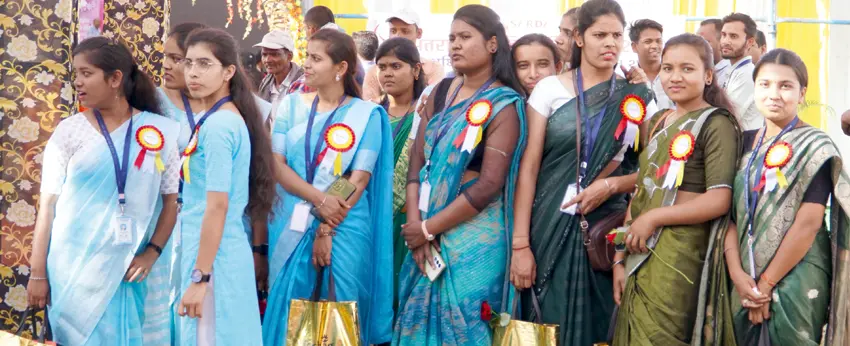
The SEP Fellowship is a 2-year full-time leadership & community development program for rural young women who want to transform child development, education, and gender outcomes in their villages. It blends:
- Educational leadership
- Community systems-building
- Child rights & protection
- Digital literacy
- Gender justice
- Field immersion
- Personality growth, communication, and leadership development
Major Achievements of the SEP Fellowship
Children’s academic performance has shown remarkable improvement, with 65% of primary-grade learners and 50% of middle-grade learners performing above the state-level ASER benchmarks, demonstrating the effectiveness of fellow-driven teaching, mentoring, and assessment systems.
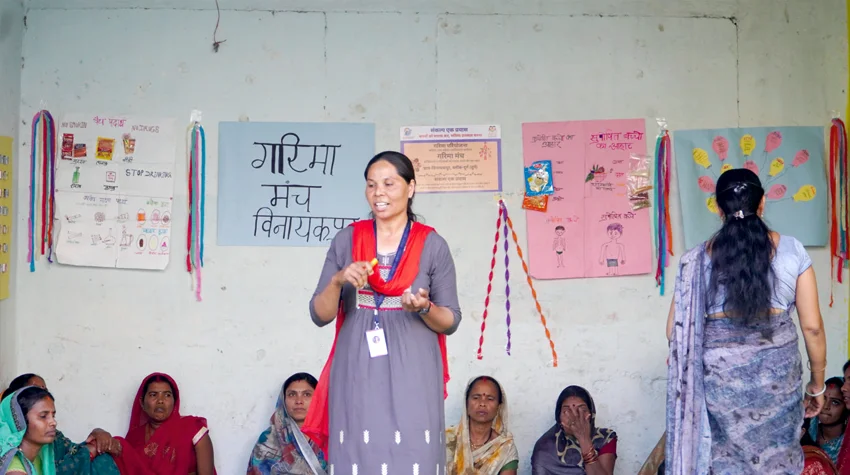
Fellows designed and tested a range of innovative academic and community interventions—including Learning Resource Centres (LRCs), Digital Classrooms, Garima Manch platforms, and Science Mela modules—each now functioning as a proven, scalable model for improving learning, awareness, and community participation.
Why Grassroots Female Leadership?
- Low foundational learning outcomes without structured support (Seekh)
- Weak adolescent STEM and digital exposure (Srijan)
- High vulnerability of girls to early marriage, violence, period poverty, cyber risks (Garima)
- Lack of role models for girls in rural communities
- Limited access to legal, financial and health information
Rural young women understand their local realities best. When trained, they become powerful catalysts for educational, social and cultural change.
Vision of the SEP Fellowship
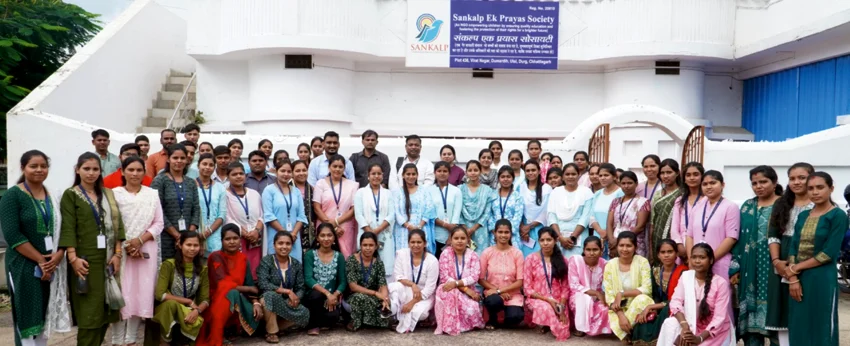
To build a cadre of trained female grassroots leaders who can:
- Improve learning outcomes
- Strengthen child safety and gender equality
- Mobilize parents and institutions
- Lead community transformation
- Progress into ABG Fellows to build Adarsh Bal Grams
Two-Year Program Goals (2025–27)
By 2027, Garima aims to build strong, safe, gender-sensitive communities by achieving:
- 500 functional Garima Manch as community platforms for mothers, girls, and women
- 50 communities with skilled, trained Garima Didis as frontline facilitators
- 80% adolescent girls (12–18 yrs) consistently using safe & hygienic menstrual practices
- Reduced anaemia levels among adolescents; increased awareness and IFA adherence
- 100 schools certified as “Safe Schools” through SEP’s safety & protection framework
- Zero child marriage & zero dropouts in Garima intervention communities
- Responsive reporting systems for abuse, violence, and child protection issues in all schools
100% students of grades 9–10 receiving life skills, career guidance & cyber safety sessions
Program Scale (2025–27)
- 500 villages covered
- 20,000 adolescent girls engaged
- 20,000 mothers/parents involved
- 200 government schools implementing Garima’s school-based model
- 250 Garima Manch (110 existing + 140 new)
- 50 community facilitators (Garima Didis) functional and strengthen
- 150 Peer Educators across communities & schools
- 40 villages under Girls Rising Program
- 50 health & awareness camps over two years
SEP Fellowship Pathway (Aligned to ABG Structure)
STEP 1:
SEP Fellowship
A two-year grassroots immersion where fellows deliver education, engage communities, ensure child safety, and develop strong facilitation, leadership, and communication skills while implementing and monitoring village-level projects.
STEP 2:
ABG Fellowship
A leadership-intensive phase where fellows take responsibility for an entire village, strengthen school linkages and governance systems, lead SMC/VLEC/Bal Sabha processes, and drive multi-sector impact across education, safety, and community development.
STEP 3:
SEP Resource Centre / Cluster Leadership
A progression into supervisory leadership where fellows manage teams, use data-driven planning for decision-making, and take on broader program leadership responsibilities across multiple villages.
SEP Fellowship Structure (2 Years)
The fellowship draws common threads from SEEKH, SRIJAN, and GARIMA and integrates them into a unified structure.
Phase 1: Orientation & Induction
An introductory phase where fellows understand the education ecosystem, gender and safety frameworks, and community systems, while building basic communication and leadership skills through exposure visits and field shadowing.
Phase 2: Educational + Social Leadership Trainings
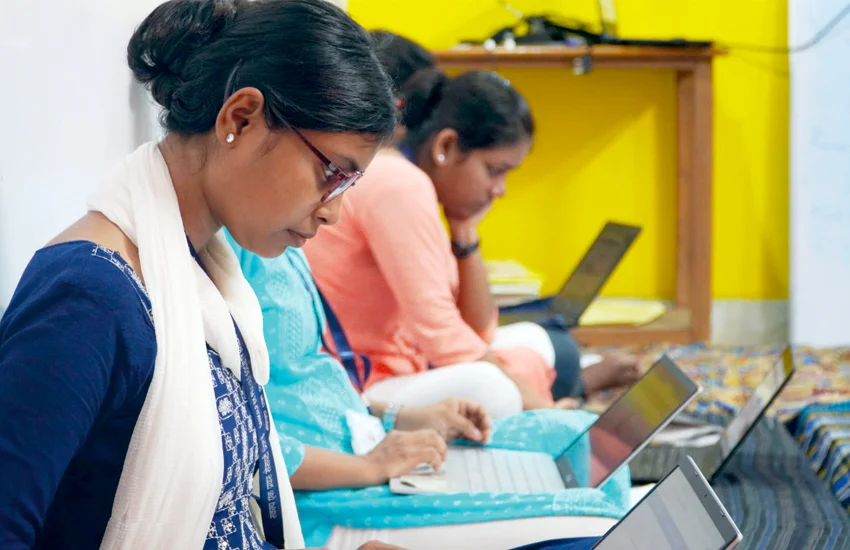
A structured training phase that builds digital literacy, classroom management skills, TLM creation abilities, 21st-century competencies, and strengthens fellows’ understanding of SEL, mental well-being, gender, and adolescent development.
Phase 3: Field Immersion
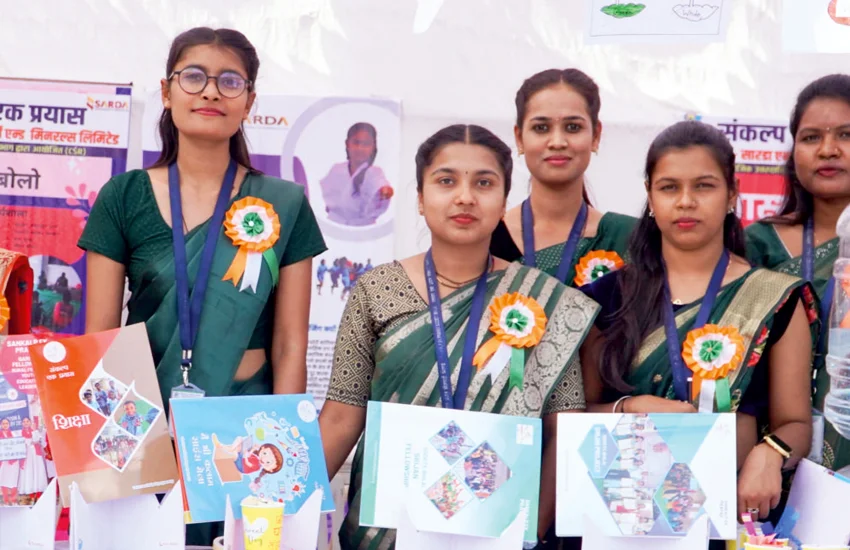
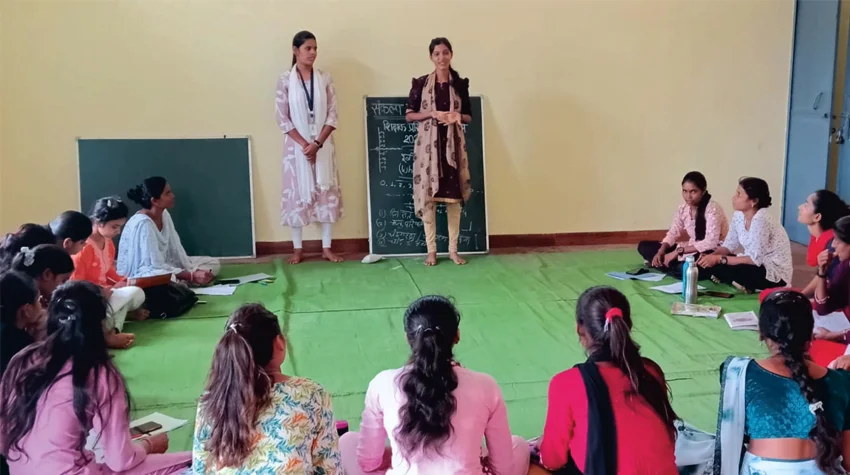
A deep community-based application phase where fellows spend over a year delivering teaching and academic support, conducting girl-empowerment sessions, leading Bal Sabhas, PTMs and home visits, facilitating Navodaya/NMMSE preparation where needed, and managing data, documentation, and reporting to drive measurable impact.
Competency Framework (ABG-aligned)
Fellows build competencies across:
A. Educational Leadership
Fellows strengthen their ability to teach foundational literacy and numeracy, facilitate STEM and inquiry-based learning, and support both early childhood and adolescent development with age-appropriate, effective practices.
B. Gender & Child Protection
Fellows build strong competencies in menstrual health awareness, safety and legal literacy, and the fundamentals of child protection, including POCSO guidelines.
C. Community Mobilisation
Fellows learn to engage parents effectively, collaborate with PRIs, SMCs, and VLECs, and lead community campaigns and events to strengthen participation and drive collective action.
D. Leadership & Personal Growth
Fellows learn to engage parents effectively, collaborate with PRIs, SMCs, and VLECs, and lead community campaigns and events to strengthen participation and drive collective action.
E. Digital & 21st Century Skills
Fellows gain proficiency in digital learning tools, understand cybersecurity fundamentals, and build strong documentation and reporting abilities essential for modern community leadership.
Role & Responsibilities of a SEP Fellow
Education & Learning
Fellows conduct FLN, STEM, life skills, and safety sessions, create and maintain LRC learning spaces where applicable, and develop lesson plans and teaching materials to support consistent, high-quality learning.
Community Engagement
Fellows strengthen community participation through PTMs and home visits, work closely with SMCs, VLECs and other village committees, and lead campaigns on safety, menstrual hygiene, and dropout prevention.
Child Safety & Gender Empowerment
Fellows conduct sessions on cyber safety, menstrual health, and overall safety awareness, while identifying at-risk children and supporting timely interventions.
Data & Documentation
Fellows maintain monthly attendance records, track learning assessment data, prepare reports and field diaries, and document events to ensure accurate monitoring and accountability.
Leadership & Facilitation
Fellows lead group discussions, guide peer educators and volunteers, and facilitate learning spaces that build confidence, ownership, and collective engagement.
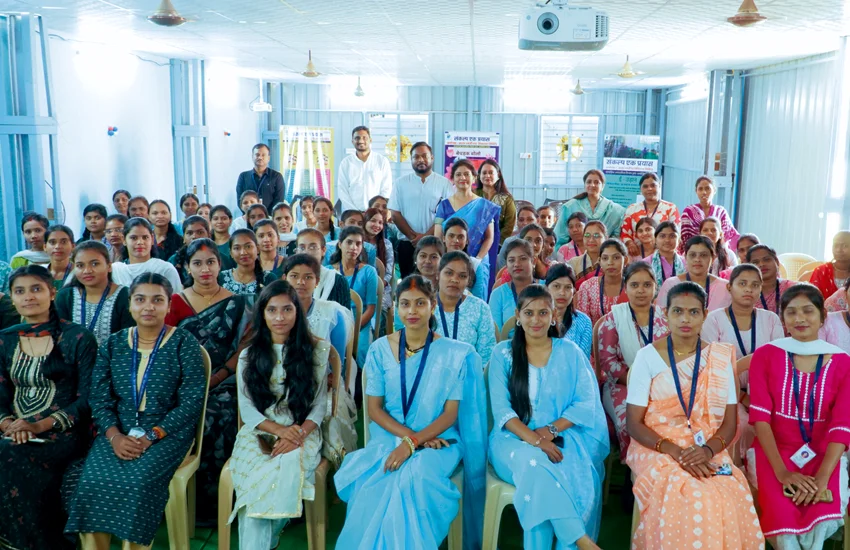
Eligibility Criteria
- Graduate (any field, Science/ Maths background for Srijan Fellowship)
- Female candidate
- Proficiency in Hindi, Chhattisgarhi; basic English
- Basic computer skills required
- Should belong to the same district as fellowship centres
- Must have a two-wheeler + license
- Progressive mindset
Selection Process
- Offline application form
- SOP submission
- Written test (aptitude + pedagogy + general awareness)
- Interview rounds (2+ rounds)
- Document verification
Stipend & Support
Uniform across Seekh, Srijan and Garima:
- ₹7000 / month — Living allowance
- ₹1000 / month - Transport + communication
- Free capacity-building workshops, travel, lodging
- Dedicated mentors + coordinators
Evaluation & Assessments
Fellows are evaluated every semester through:
- Theory tests
- Practical demonstrations
- Documentation & reporting
- Attendance & participation
- Mentor feedback
Minimum 60% required for continuation.
SEP Fellowship → ABG Fellowship Growth Path
The SEP Fellowship directly feeds into the ABG Fellowship. Graduating SEP Fellows often become:
- ABG Fellows (Village-level transformation leaders)
- Cluster Leaders
- SRC Team Members
- Program Coordinators
The goal is to build a 10-year leadership pipeline for community transformation.
Theory of Change
Train rural women
Deploy them in villages
Improve education, safety & gender outcomes
Build empowered communities
Create Adarsh Bal Grams
ANNEXURE:
SEEKH FELLOWSHIP — Technical Summary
1. Operational Model
- 1 Fellow = 1 cluster of 5 villages
- Nodal LRC (daily) + 4 cluster LRCs (monitoring)
- FLN classes in Hindi, English, Math
- Digital learning through E-Merge (LED/projector)
- Navodaya preparation (6-month module)
2. Curriculum Structure
- Education ecosystem for marginalized children
- Classroom management & pedagogy
- FLN curriculum design
- Community engagement
- 21st century skills
- Inclusive education
- Tech integration
- Assessment methods
- Data-driven leadership
- SEL, ECCE, mental health
- Menstrual health, community systems
SRIJAN FELLOWSHIP — Technical Summary
1. Operational Model
- STEM-focused LRCs for Grades 6–10
- Digital classrooms (e-Udaan)
- Computer labs
- NMMSE coaching
- Science Melas and STEM fairs
2. Curriculum Structure
Semester-wise modules:
- Inclusive education
- Digital tools for education
- Leadership + communication
- Reading, Math, Science pedagogy
- Assessment & evaluation
- Community engagement
- Advanced pedagogy (inquiry, project-based)
- Education policy & advocacy
- ECCE + creative learning
- Entrepreneurship & innovation
GARIMA FELLOWSHIP — Technical Summary
1. Operational Model
- Grassroots gender empowerment
- Sessions for girls, adolescents, women
- Health, safety, cyber awareness, rights
- Community engagement & mobilization
2. Curriculum Structure
Key modules:
- Gender & identity
- Menstrual health
- Cyber safety
- Life skills
- Financial literacy
- Government schemes
- Child rights, human rights
- Safety & self-defence basics
- Community empowerment
- Mental health
Call for Action
This fellowship is more than a program it is a promise. A promise that every child deserves safety, every girl deserves dignity, and every community deserves leadership that listens and cares. With each fellow who steps forward, we come one step closer to this promise becoming reality.
Join hands with SEP Fellowship to ensure that every child in rural Chhattisgarh grows up in a village filled with learning, safety, and care. Your support empowers trained young women to guide families, protect children, and build a future where no child is left behind.

Stipend Support

Travel Support

Training Support (External)

Mentor/ Supervision Support

Equipment Support
Cost: Rs. 11833 per fellow per month
Success Stories of SEP Fellows
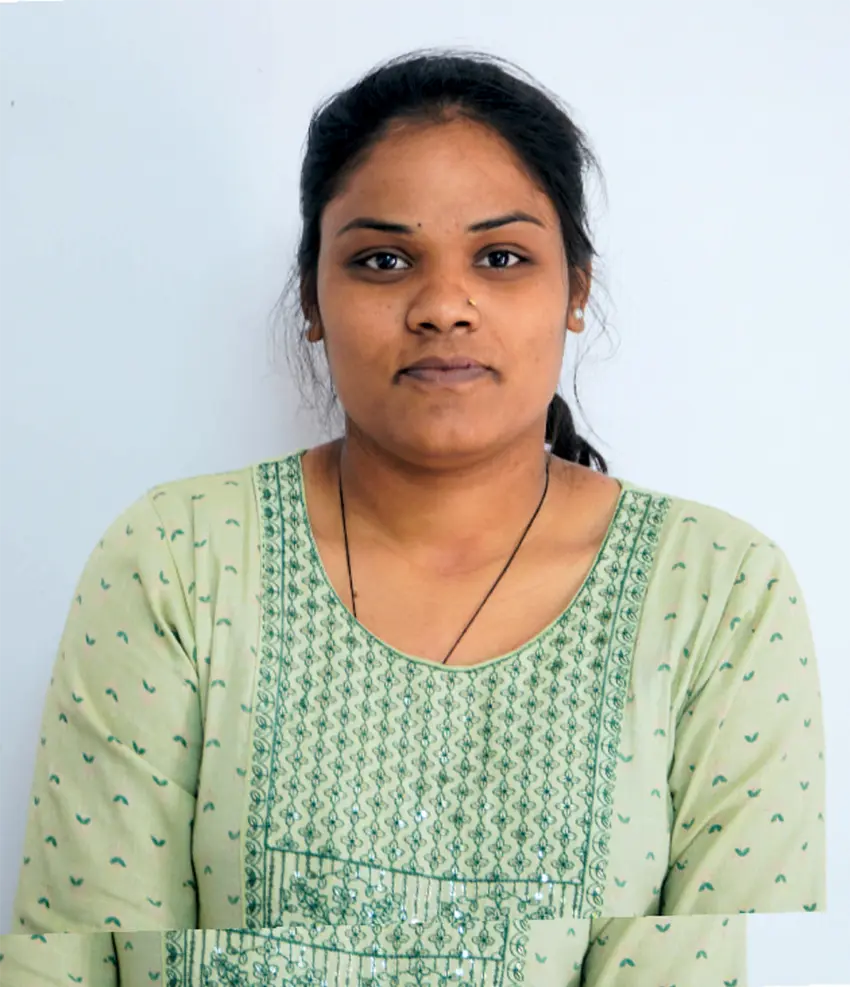
Minakshi Kosre
Minakshi Kosre – “From Teaching in a Small Room to Leading Education Across Ten Villages”
Minakshi began her journey by teaching a handful of children in her small home with no books, pencils, or learning materials. Her passion for reaching children who could not afford education kept her going. When she joined Sankalp Ek Prayas, she gained access to training, community support, and structured teaching tools.
Her classroom shifted from a cramped room to a proper Learning Resource Centre supported by parents and volunteers.
Minakshi quickly grew into a Master Trainer, guiding teachers across five villages.
Despite financial struggles and transport challenges, she chose to join the Fellowship and was soon coordinating 10 learning centres, managing academics, mentoring teachers, and conducting Navodaya preparation. Exposure visits to leading institutions across India deepened her understanding of education and leadership.
Today, she serves as an ABG Advanced Fellow, working to transform an entire village into a Child-Friendly Adarsh Bal Gram. Her journey reflects courage, resilience, and the transformative power of opportunity.
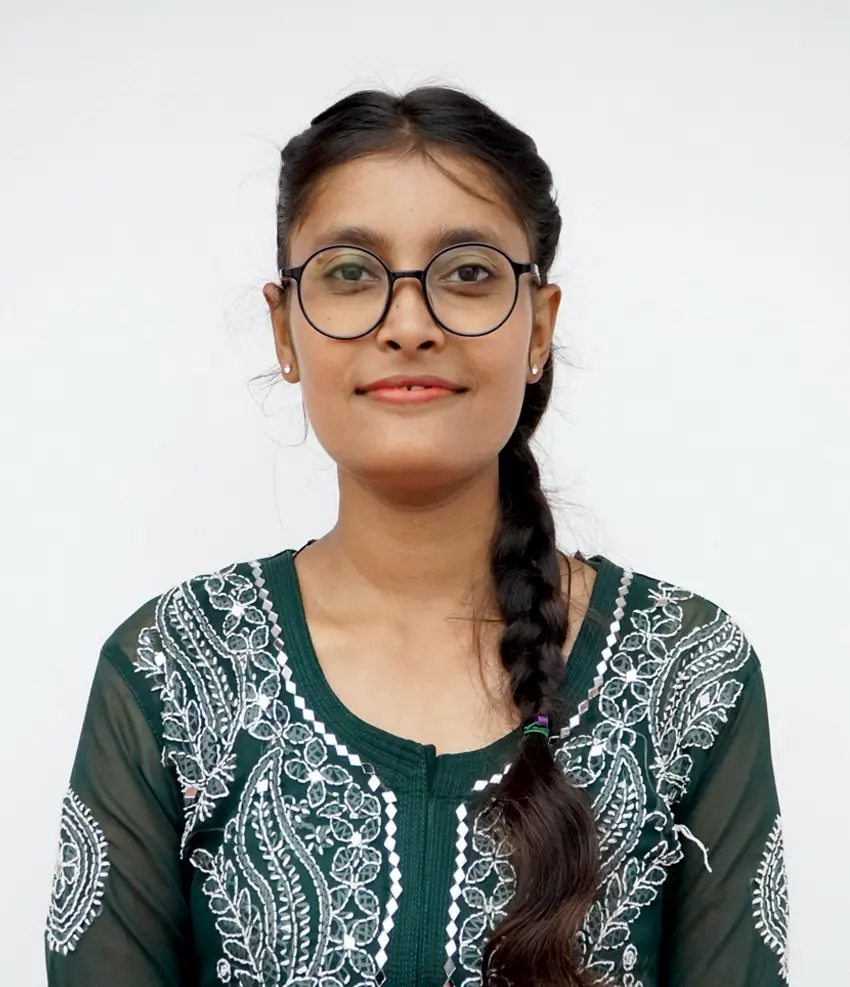
Renuka Verma
Renuka Verma – "A First-Generation Learner Who Grew into a STEM Educator and Community Leader."
Renuka Verma’s story is a powerful example of how a young woman’s determination can uplift an entire community. Growing up in a modest family, raised single-handedly by her mother, Renuka always carried the dream of becoming an educator.
She began as a community teacher and within four years advanced to the role of Master Trainer, preparing adolescent learners in STEM and academic skills.
The Fellowship gave her structured training, exposure visits, and real field experience, enabling her to build confidence, leadership, and a strong identity within her village.
With her stipend, she completed her B.Ed. and supported her sisters’ education while continuing to guide students in multiple villages.
Today, the community refers to her respectfully as “Madam,” and she is recognized not just as a teacher, but as a changemaker who mentors youth, strengthens school systems, and empowers families to prioritise education.
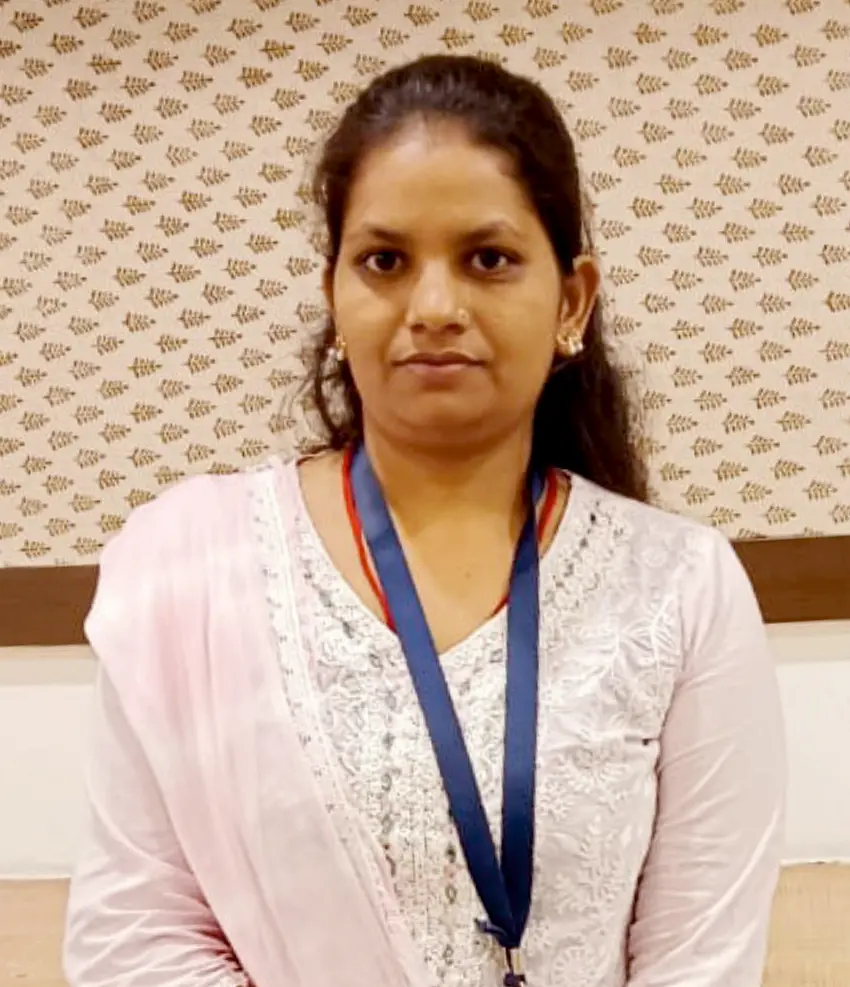
Chetna Sahu
Chetna Sahu – “Overcoming Fear to Becoming a Confident Voice for Girls’ Safety and Empowerment”
Renuka Verma’s story is a powerful example of how a young woman’s determination can uplift an entire community. Growing up in a modest family, raised single-handedly by her mother, Renuka always carried the dream of becoming an educator.
She began as a community teacher and within four years advanced to the role of Master Trainer, preparing adolescent learners in STEM and academic skills.
The Fellowship gave her structured training, exposure visits, and real field experience, enabling her to build confidence, leadership, and a strong identity within her village.
With her stipend, she completed her B.Ed. and supported her sisters’ education while continuing to guide students in multiple villages.
Today, the community refers to her respectfully as “Madam,” and she is recognized not just as a teacher, but as a changemaker who mentors youth, strengthens school systems, and empowers families to prioritise education.